

MIDlife HEALTH & HORMONE COACHING FOR WOMEN 40+
Your Body Is Changing. Your Strategy Should, Too.
You’ve tried fasting, counting calories, cleanses, HIIT, Pilates, CrossFit — and you’re still frustrated by stubborn weight gain, low energy, cravings, or a body that just doesn’t respond like it used to.
You don’t need another restrictive diet or workout trend. You need a smarter, science-informed approach to glucose management, hormone health, and sustainable weight loss that works with your changing body.
I’m Cherise Mazur, an NBC-HWC Board Certified Health Coach, Holistic Menopause Coach & 600-hour trained Yoga Instructor specializing in Yin and nervous system regulation. I help women over 40 make sense of their changing bodies, build realistic habits, and feel more confident in how they eat, move, and care for themselves.
Eating Pretty Well, Doing All the Things… So Why Do You Feel So Off?
Maybe you’re eating healthier than ever. You’re exercising, trying to prioritize sleep, and doing your best to take care of yourself.
But the scale keeps creeping up. Your energy disappears by 3 p.m. The cravings feel relentless. Your brain feels foggy, your sleep is unpredictable, and the strategies that once worked seem to have stopped working.
You start wondering: Is this just aging?
Are my hormones to blame?
Should I consider a GLP-1?
You’re not imagining the changes. And you don’t need to keep guessing.
Midlife brings real changes in hormones, muscle mass, sleep, and how your body regulates blood sugar. Understanding those changes can help you make more informed decisions about what your body needs now.
CHERISE'S MIDlife NON-NEGOTIABLE
Before you cut calories, look at your added sugars. As estrogen declines during the menopause transition, your body can become less sensitive to insulin.
What might you notice?
Energy highs and crashes, especially after meals.
Strong cravings for sweets or feeling hungry again soon after eating.
More difficulty managing your weight, particularly around your middle.
Blood sugar levels that are higher than they used to be, even if you haven't dramatically changed your diet.
These symptoms can have many causes, so they aren't proof of insulin resistance. But they're a good reason to look more closely at your daily habits.

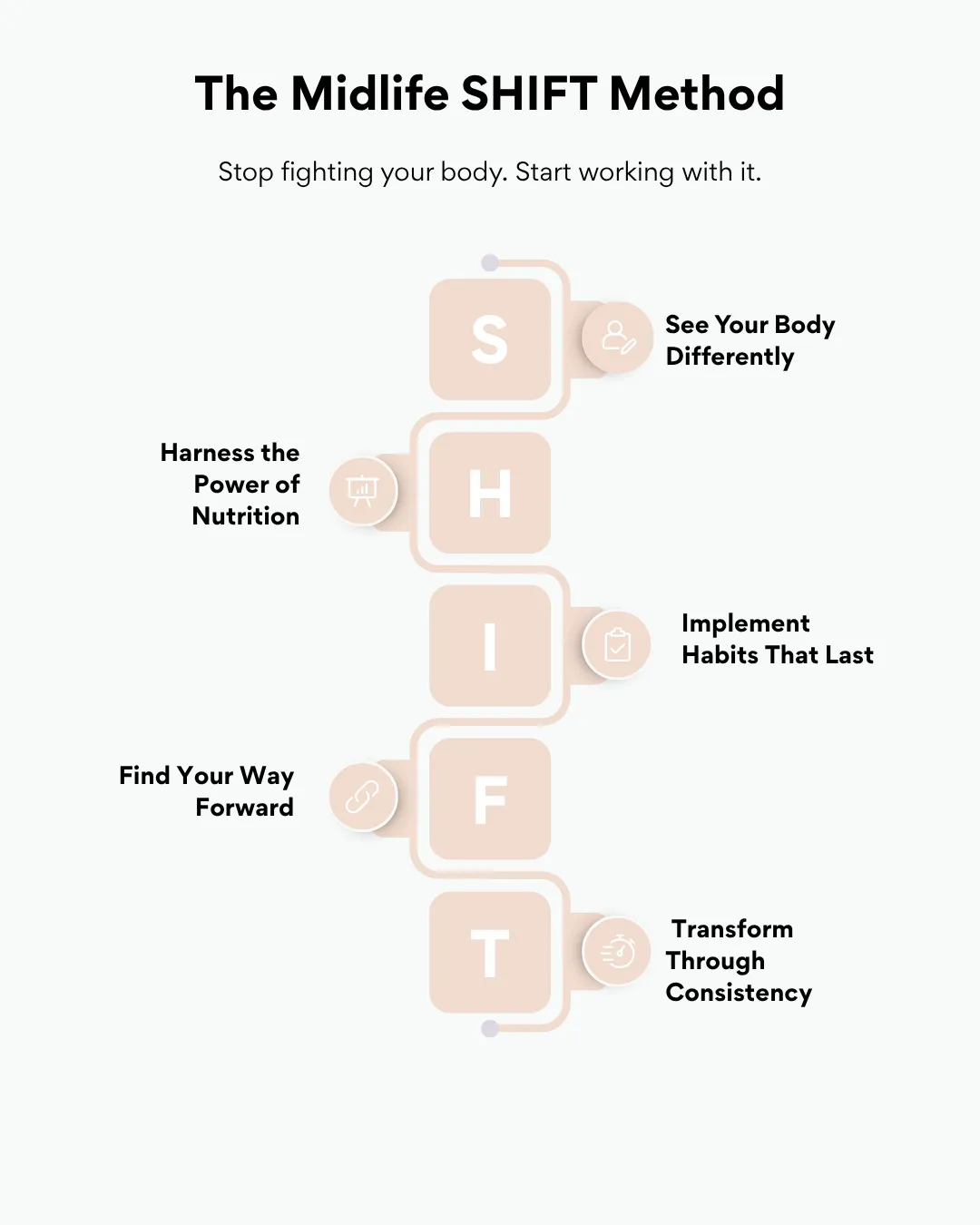
My Midlife S.H.I.F.T Method
Stop fighting your body. Start working with it.
Four powerful shifts to support your hormones, improve glucose management, and build sustainable habits for lasting results.
S -See Your Body Differently
Understand midlife hormones, sugar control, and the changes influencing how you feel.
H -Harness the Power of Nutrition
Build balanced, protein-forward, fiber-rich meals that support glucose management, fullness, and energy.
I -Implement Habits That Last
Make movement, strength training, sleep, and stress management work for your real life.
F -Find Your Way Forward
Use personalized coaching, self-awareness, and small, sustainable steps to create change that lasts. Not restrictions
T- Transform Through Consistency
Turn small, sustainable steps into lasting changes that support your hormones, metabolism, and long-term health.







Copyright © 2019-2026 My Fit Life with Cherise Mazur - All Rights Reserved


